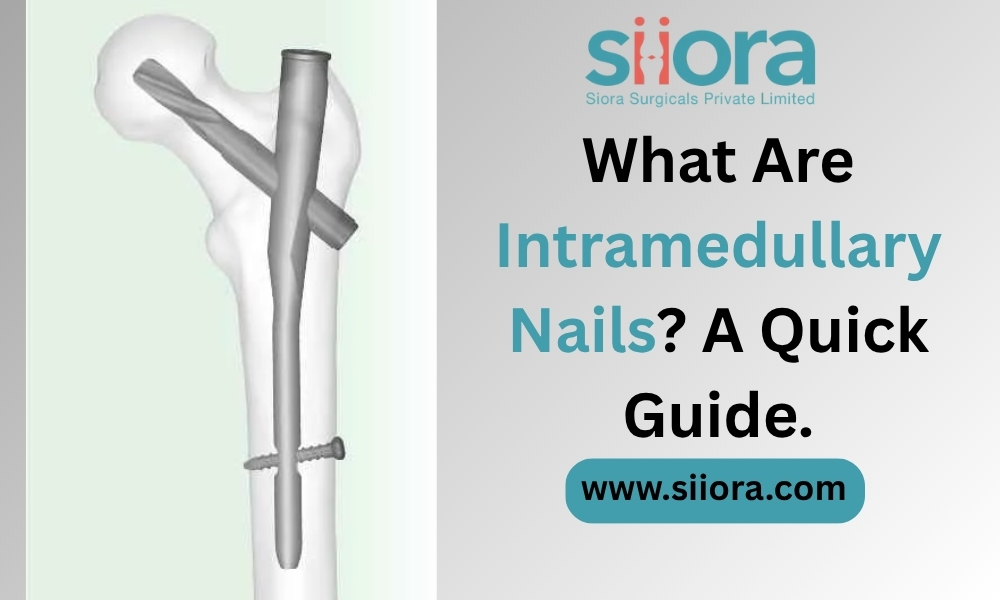
When it comes to fixing broken bones, especially long bones like the femur or tibia, surgeons have a few tools they rely on. One of the most effective and widely used options is the intramedullary nail. It might sound complex, but the concept is simple and brilliant: a metal rod inserted into the center of the bone to hold it steady while it heals.
Let’s break it down and understand what intramedullary nails are, how they work, and why they’re a game-changer in orthopedic surgery.
What Exactly Is an Intramedullary Nail?
An intramedullary (IM) nail, also known as an IM rod, is a long, sturdy metal implant designed to fit inside the medullary cavity, the hollow center of long bones. These nails are typically made from stainless steel or titanium, making them strong, lightweight, and biocompatible (safe to stay inside the human body).
They’re used to treat fractures in major long bones such as the:
- Femur (thigh bone)
- Tibia (shinbone)
- Humerus (upper arm bone)
Once inserted, the nail acts like an internal splint, holding the broken pieces of bone in proper alignment so they can heal naturally.
How Are Intramedullary Nails Inserted?
The surgical process is usually minimally invasive. The surgeon makes a small incision near one end of the bone and creates an entry point into the medullary canal. Using X-ray guidance, the nail is carefully inserted down the canal and across the fracture site.
To secure the nail in place, locking screws are added at both ends. These screws prevent the nail from rotating or shifting, ensuring that the bone stays aligned during recovery.
The entire procedure aims to reduce muscle damage, minimize blood loss, and promote quicker healing.
Why Are Intramedullary Nails So Effective?
There are several reasons why IM nails are considered one of the best options for fracture fixation:
- Strong Support: Being placed inside the bone, the nail bears the body’s weight effectively, providing excellent support even during early movement.
- Minimized Soft Tissue Damage: Compared to traditional plating, IM nailing involves less cutting and disruption of surrounding tissues.
- Early Mobility: In many cases, patients can begin moving or bearing weight on the limb shortly after surgery, which helps reduce the risk of complications like blood clots or joint stiffness.
- High Union Rates: Most patients experience good healing with fewer chances of the fracture reopening or healing in the wrong position.
Types of Intramedullary Nails
Different fractures require different types of IM nails. Here are a few common ones:
- Femoral Nails: Designed for fractures of the thigh bone.
- Tibial Nails: Used for fractures in the shinbone.
- Humeral Nails: Ideal for upper arm bone fractures.
- Reconstruction Nails: These come with multiple locking options for complex fractures.
Some nails are solid, while others are cannulated (hollow) to allow placement over a guidewire, which improves surgical accuracy.
Are There Any Risks?
Like any surgical procedure, intramedullary nailing comes with some risks. These can include infection, bleeding, blood clots, or irritation around the locking screws. Rarely, the nail may need to be removed if complications arise. However, in the majority of cases, outcomes are positive, and patients return to normal activity within weeks or months, depending on the injury.
Final Thoughts
Intramedullary nails are a reliable, time-tested orthopaedic implant for treating long bone fractures. Their ability to stabilize bones from the inside, support early movement, and promote fast recovery has made them a go-to option in trauma surgery. If you or a loved one is facing a long bone fracture, don’t hesitate to ask your orthopedic surgeon if IM nailing is the right option.
 siiora surgicals pvt. ltd